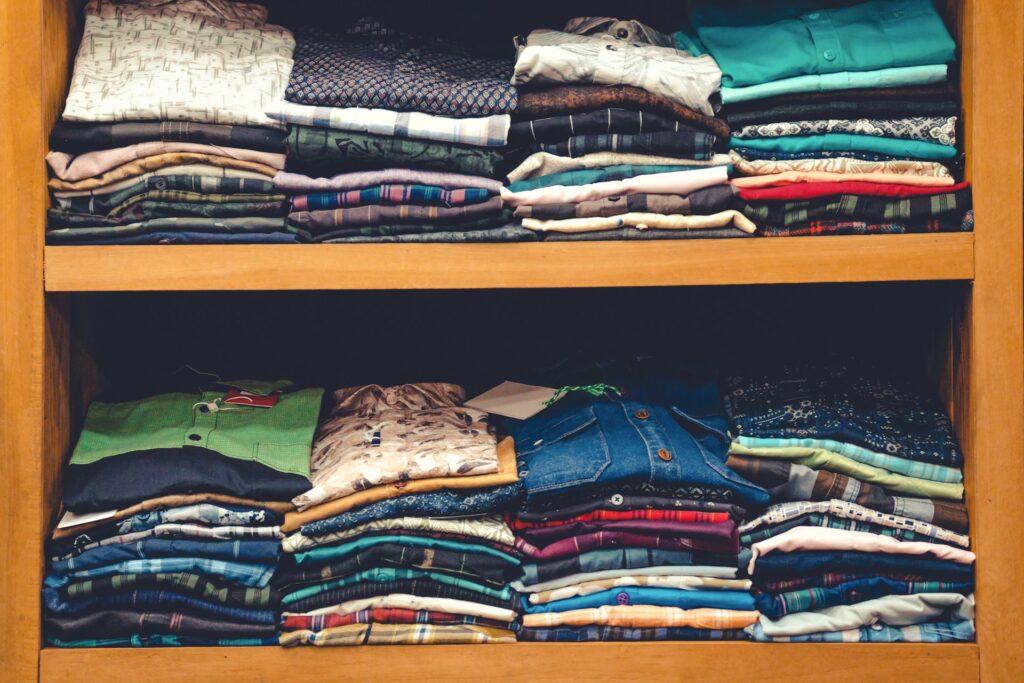
I stood in my closet at three months postpartum, crying over a drawer full of jeans that didn’t fit. I’d been rotating between the same two pairs of leggings for weeks, feeling frumpy and invisible, waiting for my body to “go back” so I could wear real clothes again.
My partner found me there and asked gently, “Why don’t you just buy clothes that fit you now?”
The question stunned me. Because I’d internalized the message that buying clothes for my current body meant giving up, accepting defeat, admitting I’d failed at “getting my body back.” Clothes that fit felt like a betrayal of who I used to be.
It took me weeks to realize: wearing clothes that don’t fit is what was making me feel terrible. My body wasn’t the problem. My wardrobe was.
If you’re living in maternity clothes months postpartum, squeezing into pre-pregnancy clothes that dig into your skin, or avoiding leaving the house because you have nothing to wear, this post is for you. Let’s talk about building a postpartum wardrobe that actually serves you.
Why Your Pre-Pregnancy Clothes Don’t Fit (And Why That’s Okay)
First, let’s address the reality: your body has changed. Not temporarily—some of these changes are permanent. And that’s not a tragedy, it’s biology.
Common postpartum body changes that affect clothing:
- Wider ribcage (yes, your bones actually expand during pregnancy and may not fully return)
- Different breast size and shape (whether you breastfeed or not)
- Changed hip structure (your pelvis widens to accommodate birth)
- Redistributed body fat (even at the same weight, fat may settle differently)
- Looser or stretched skin around your midsection
- Different muscle tone and composition
- Changed posture from carrying and feeding a baby
Some people’s bodies do return close to pre-pregnancy proportions. Many don’t. Both are completely normal outcomes of growing and birthing a human.
Keeping a closet full of clothes that don’t fit isn’t motivation—it’s daily self-punishment. Every time you open that closet, you’re confronted with a version of yourself that doesn’t exist anymore, reinforcing the message that your current body is wrong.
The Psychology of the “Aspirational Wardrobe”
Holding onto pre-pregnancy clothes “for motivation” or “when I lose the weight” creates several problems:
It keeps you in a state of waiting: Your real life—the one happening right now—is put on hold while you wait for some future version of yourself to arrive.
It reinforces body shame: Every glimpse of those clothes triggers thoughts like “I should fit into these by now” or “I’ve failed.”
It limits your present experience: You’re not fully inhabiting your life because you’re constantly comparing now to before.
It wastes mental energy: Decision fatigue, getting dressed anxiety, and the emotional weight of confronting those clothes daily drains energy you need for everything else.
It isolates you: If you have nothing to wear, you’re less likely to leave the house, see friends, or do things that support your mental health.
The “aspirational wardrobe” keeps you stuck in the past instead of living in the present.
Permission to Buy Clothes That Fit
You need explicit permission for this, so here it is:
Buying clothes that fit your current body is not giving up. It’s self-care.
It doesn’t mean:
- You’re “accepting” being this size forever
- You’ve failed at losing weight
- You don’t value health
- You’re letting yourself go
It means:
- You deserve to feel comfortable in your body right now
- Your current body is worthy of care and respect
- You’re choosing to fully inhabit your present life
- You recognize that feeling good in your clothes improves your mental health
If your body changes again (and it might—postpartum bodies often continue shifting for 1-2 years), you can buy different clothes then. Clothes are temporary. Your relationship with your body doesn’t have to be.
Building a Functional Postpartum Wardrobe
You don’t need a complete wardrobe overhaul or significant investment. You need a few key pieces that fit your body and lifestyle right now.
Start With the Basics
The essential postpartum wardrobe includes:
2-3 pairs of comfortable bottoms
- Stretchy jeans or jeggings in your current size
- Soft joggers or wide-leg pants
- Leggings that don’t roll down (high-waisted with a supportive band)
Look for: Mid-rise or high-rise waistbands that sit comfortably without cutting in. Avoid low-rise anything—postpartum bodies rarely appreciate them.
4-5 tops that make you feel human
- If breastfeeding: nursing-friendly but not obviously maternity (crossover tops, button-downs, stretchy v-necks)
- If not breastfeeding: anything that fits your current bust and torso comfortably
- At least one top that makes you feel “put together” for when you need that boost
Look for: Fabrics with give, flattering necklines, tops that skim rather than cling, styles that work with your new proportions.
One comfortable dress or jumpsuit
- Makes getting dressed effortless
- Works for multiple occasions
- Feels special without being fussy
Look for: Wrap styles, empire waists, stretchy fabrics, nursing access if needed.
Comfortable, supportive undergarments
- Bras that fit your current size (get professionally fitted if possible)
- Underwear that don’t dig in or roll down
- If you’re dealing with postpartum bleeding or incontinence, comfortable period underwear
Don’t skimp here. Ill-fitting undergarments make everything else feel worse.
One “feel good” piece
- Something that makes you feel like yourself
- Could be a blazer, a statement necklace, a soft cardigan, a colorful scarf
- The piece you reach for when you need a confidence boost
Shopping Strategies on a Budget
Postpartum wardrobes don’t need to be expensive, especially since your body may still be changing.
Thrift and consignment stores: Other people’s postpartum bodies are also changing. Secondhand stores often have great options in a range of sizes.
Online consignment: Poshmark, ThredUp, and similar platforms let you filter by size and style, then resell when your body changes again.
Rental services: If you need work clothes or special occasion outfits, rental services let you wear nice things without permanent investment.
Buy-nothing groups and parent swaps: Many communities have clothing swaps specifically for postpartum parents.
Strategic new purchases: Invest in a few quality basics that fit well. Skip the cheap fast fashion that won’t last.
Extensions and modifications: Belly bands can extend the life of pre-pregnancy pants. A tailor can adjust some items for a fraction of buying new.
What to Do With Pre-Pregnancy Clothes
You have options beyond keeping them in your closet as daily reminders:
Box and store them: Put them in storage out of sight. If your body changes and they fit again, great. If not, you can deal with them later when you’re emotionally ready.
Keep a few meaningful pieces: Maybe there’s a dress from a special occasion or jeans you loved. Keep those for sentimental reasons, but store them separately.
Donate or sell them: This can feel scary, but it’s also liberating. You’re making space for who you are now.
Give yourself a timeline: “I’ll revisit these in six months/one year.” When that time comes, reassess honestly.
There’s no right answer. Do what feels manageable for you right now.
Dressing Your Body With Compassion
Getting dressed postpartum can trigger intense emotions about your changed body. Here’s how to make it easier:
Reject “Flattering” as the Goal
The fashion industry teaches us to dress in ways that make our bodies look smaller, longer, or closer to some idealized standard. Postpartum, throw that out.
Instead of “flattering,” aim for:
- Comfortable: Can you move, sit, nurse, pick up your baby without restriction?
- Confident: Does this outfit help you feel more like yourself?
- Authentic: Does this reflect who you are, not who you think you should be?
- Functional: Does this work for your actual life (spit-up, nursing, practical care)?
Embrace Your New Proportions
Your body has different proportions now. Fighting against them creates frustration. Working with them creates ease.
If your torso is now longer/your waist is higher: Look for tops with longer lengths, empire waists, or styles that create visual interest above or below the waist rather than at it.
If your bust is significantly different: Get fitted for proper bra size. Choose tops with appropriate coverage and support for comfort, not concealment.
If your hips are wider: This is your body’s architecture now. Clothes that accommodate your hips will feel infinitely better than clothes that fight them.
If your midsection is softer: Fabrics that drape and skim rather than cling will feel more comfortable. Structured waistbands can provide gentle support without compression.
Use Layers Strategically
Layering serves multiple purposes postpartum:
- Provides nursing access
- Allows for temperature regulation (postpartum sweating is real)
- Creates visual interest without tight-fitting clothes
- Gives you options throughout the day
A cardigan, kimono, or light jacket can transform basic outfits and provide both coverage and style.
Accessorize for Identity
When your body feels unfamiliar, accessories can anchor you to your sense of self:
- Jewelry that reminds you of who you are
- A watch that makes you feel capable
- A bag that’s functional but reflects your style
- Shoes that feel like “you” (even if they’re comfortable flats now)
These pieces say “I’m still me” when your reflection feels foreign.
Addressing Common Postpartum Wardrobe Challenges
“I’m breastfeeding and need nursing access”
Nursing clothes have come a long way, but you don’t need special nursing outfits. Regular clothes that work:
- Button-down shirts
- Wrap tops and dresses
- Stretchy v-necks you can pull down
- Two-piece outfits (lift the top, maintain coverage)
- Cardigans over tank tops
“I’m touched out and can’t stand anything against my skin”
Sensory sensitivity postpartum is real. Look for:
- Natural, breathable fabrics (cotton, linen, bamboo)
- Looser fits that don’t cling
- Seamless or flat-seam construction
- Soft, non-restrictive waistbands
- Tag-free clothing
Sometimes the answer is literally cutting out tags and wearing clothes inside-out if seams bother you.
“Everything is covered in spit-up anyway”
This is the season of practical clothing. That’s okay. Your wardrobe doesn’t have to be aspirational or Instagram-worthy. It needs to:
- Wash well
- Hide stains (patterns and darker colors help)
- Not make you feel terrible when it gets ruined
Save the dry-clean-only items for later.
“I don’t recognize my style anymore”
Your style may have shifted with your identity. That’s part of matrescence—becoming a different person means your aesthetic might change too.
Give yourself permission to explore:
- What feels good now might be different than before
- Comfort and function might have become more important
- Your color preferences, patterns, or silhouettes might have shifted
- You’re allowed to evolve
“I can’t afford new clothes right now”
Real budget-conscious strategies:
- Focus on just 2-3 essential pieces that you’ll wear constantly
- Borrow from friends or family
- Use buy-nothing groups and clothing swaps
- Invest in one good pair of pants and rotate tops
- Wear your partner’s clothes (oversized button-downs, joggers, t-shirts can be styled)
Even one pair of pants that fit properly can dramatically improve how you feel.
The Confidence Connection
Wearing clothes that fit isn’t superficial—it directly impacts your mental health and confidence.
When you wear ill-fitting clothes:
- You’re constantly aware of physical discomfort
- You’re reminded all day that your body is “wrong”
- You feel self-conscious and want to hide
- You avoid activities and social connections
- You disconnect further from your body
When you wear clothes that fit:
- You can focus on being present instead of constantly adjusting
- You receive visual confirmation that you’re worthy of care
- You feel more capable and confident
- You’re more likely to leave the house and connect with others
- You rebuild a positive relationship with your body
This isn’t vanity. This is supporting your mental health through a practical, accessible intervention.
Beyond Clothing: The Bigger Picture
Your wardrobe is one piece of postpartum body acceptance, but it connects to larger themes:
Body image: How you dress your body reflects how you feel about it. Treating your current body with care through properly fitting clothes is a form of self-compassion.
Identity: Clothing is one way we express who we are. Finding pieces that reflect your evolving identity helps you feel more integrated during matrescence.
Mental health: The daily frustration of ill-fitting clothes compounds other postpartum stressors. Removing this source of friction supports your overall wellbeing.
Prioritization: Spending money on clothes for yourself (even thrifted or budget-friendly) is practicing the belief that you matter, not just your baby.
Present-moment living: Letting go of the “aspirational wardrobe” is letting go of waiting for your life to start when your body is “right.” Your life is happening now.
What to Tell People Who Comment
Unfortunately, your wardrobe choices may invite commentary from others. Here are responses:
“Are you keeping your maternity clothes?” “No, I’m building a wardrobe for my current body.”
“Don’t buy too much—you’ll lose the weight!” “I’m focusing on feeling comfortable now, not on weight loss.”
“You should just lose the baby weight so your clothes fit.” “My health goals aren’t about weight. This conversation isn’t helpful.”
“I got back into my jeans by six weeks!” “Every body is different. I’m happy with my approach.”
You don’t owe anyone explanations about your body or your wardrobe choices.
Moving Forward
Building a postpartum wardrobe that works for you is an act of radical self-acceptance in a culture that tells you your postpartum body is a before photo waiting to become an after.
It’s choosing presence over waiting. Comfort over punishment. Self-compassion over self-criticism.
Your body changed because it did something extraordinary. It deserves to be dressed with care, respect, and clothes that actually fit.
You deserve to feel confident, comfortable, and like yourself—not someday when your body is different, but right now, in the body you have today.
Start with one item. One pair of pants that fit properly. One top that makes you feel human. One dress that’s easy to wear. Build from there.
Your postpartum wardrobe doesn’t have to be perfect or expensive or particularly fashionable. It just has to work for your life and help you feel like you can fully show up in it.
That’s what matters. Not the number on the tag, but how you feel when you’re wearing it.
Need Support Embracing Your Postpartum Body?
If you’re struggling with body image, identity changes, or accepting your postpartum body, I’m here to help. Together we can explore what self-acceptance looks like for you and develop practical strategies for feeling more at home in your body.
Book a session with me to work through body image challenges and build genuine self-compassion during this transition.
Exploring identity changes alongside body changes? Read: Journaling for Matrescence: Prompts to Navigate Identity Loss and Change
Want to reframe how you think about postpartum health? Check out: Beyond the Scale: Defining Your Health Goals Postpartum
Join our WhatsApp Channel