Three weeks postpartum, I found myself scrolling through Instagram, bombarded with ads for postpartum weight loss programs. “Get your body back!” they promised. “Six-week transformation!” Meanwhile, I could barely walk to the bathroom without pain, my body felt like a stranger’s, and I was drowning in a fog of exhaustion and anxiety.
The message was clear: my postpartum body was a problem to fix, preferably as quickly as possible.
But here’s what no one told me: movement after birth isn’t about “bouncing back” or fitting into pre-pregnancy jeans. It’s about coming home to your body, regulating your nervous system, and supporting your mental health during one of the most vulnerable periods of your life.
Let’s reframe postpartum exercise entirely.
Why the “Get Your Body Back” Message Is Harmful
The postpartum fitness industry thrives on shame, urgency, and the idea that your worth is tied to how quickly you erase evidence of pregnancy. This messaging is not only psychologically damaging—it’s medically irresponsible.
Your body just performed a biological miracle. It grew and birthed a human being. Whether you delivered vaginally or via cesarean, your body needs time to heal. Your pelvic floor is recovering. Your abdominal muscles may be separated. Your joints are still loose from relaxin. Your cardiovascular system is adjusting to massive changes.
Pushing your body into intense exercise before it’s ready can cause:
- Pelvic floor dysfunction (incontinence, prolapse)
- Worsening diastasis recti (abdominal separation)
- Joint injuries
- Delayed healing
- Exhaustion that worsens mental health
More importantly, making weight loss the goal of postpartum movement completely misses the point. Your mental health matters infinitely more than your jean size.
Movement as Mental Health Medicine
Research consistently shows that gentle movement is one of the most effective interventions for postpartum depression, anxiety, and overall mental wellbeing. Not because it burns calories—because it:
Regulates your nervous system: Movement helps discharge stress hormones and activates your parasympathetic nervous system, moving you out of fight-or-flight mode.
Boosts mood-regulating neurotransmitters: Exercise increases serotonin, dopamine, and endorphins—the exact chemicals that are often depleted in postpartum mood disorders.
Reduces inflammation: Chronic stress and sleep deprivation cause inflammation, which is linked to depression. Gentle movement has anti-inflammatory effects.
Reconnects you with your body: Pregnancy and birth can create disconnection from your body. Mindful movement helps you re-establish that relationship with curiosity rather than judgment.
Provides a sense of agency: When so much feels out of control postpartum, choosing to move your body can restore a sense of autonomy.
Creates space: Even 10 minutes away from constant caregiving can provide mental relief and perspective.
Notice that none of these benefits require weight loss, intense workouts, or “getting your body back.”
What “Gentle Movement” Actually Means
Gentle movement doesn’t mean easy or unchallenging. It means:
Appropriate for your current capacity: What you can do three weeks postpartum is different from three months, which is different from nine months. Gentle means meeting yourself where you are.
Focused on feeling, not appearance: The question isn’t “will this help me lose weight?” but “how does my body feel during and after this movement?”
Sustainable and pleasurable: If you dread it or it leaves you depleted, it’s not the right movement for right now.
Respectful of healing: Movement that honors your body’s recovery timeline rather than rushing it.
Free from performance pressure: You’re not training for anything or trying to achieve a specific outcome. You’re simply moving because it feels good.
When to Start Moving Postpartum
Every body heals differently, and there’s no universal timeline. However, here are general guidelines:
Weeks 0-2: Focus entirely on rest and basic recovery. “Exercise” means walking slowly to the bathroom, getting up and down from bed, maybe short walks around your home. This is not the time for structured movement.
Weeks 2-6: If you had an uncomplicated vaginal birth and have been cleared by your healthcare provider, you can begin very gentle movement like:
- Short, slow walks (5-10 minutes)
- Gentle breathing exercises
- Pelvic floor awareness practices
- Gentle stretching
If you had a cesarean, significant tearing, or complications, you’ll need longer before beginning movement. Always follow your healthcare provider’s guidance.
6 weeks onward: After your postpartum checkup and clearance from your provider, you can gradually increase movement intensity and duration. But “cleared for exercise” doesn’t mean “ready for high-intensity workouts.” It means your body has healed enough to begin rebuilding capacity slowly.
Red flags to stop movement:
- Increased bleeding
- Pain (different from muscle fatigue)
- Feeling of heaviness or pressure in your pelvic floor
- Leaking urine during movement
- Visible abdominal doming or coning
- Dizziness or nausea
- Extreme fatigue that lasts beyond the movement session
Types of Movement for Mental Health
The best postpartum movement is whatever you’ll actually do and genuinely enjoy. Here are options that particularly support mental health:
Walking
The most underrated postpartum exercise. Walking:
- Requires no equipment or special skills
- Can be done with your baby in a carrier or stroller
- Gets you outside (exposure to natural light helps regulate mood)
- Is gentle enough for early postpartum
- Can be social if done with others
Start with 5-10 minutes and gradually increase. Focus on the sensory experience—what you see, hear, smell—rather than pace or distance.
Breathwork and Gentle Yoga
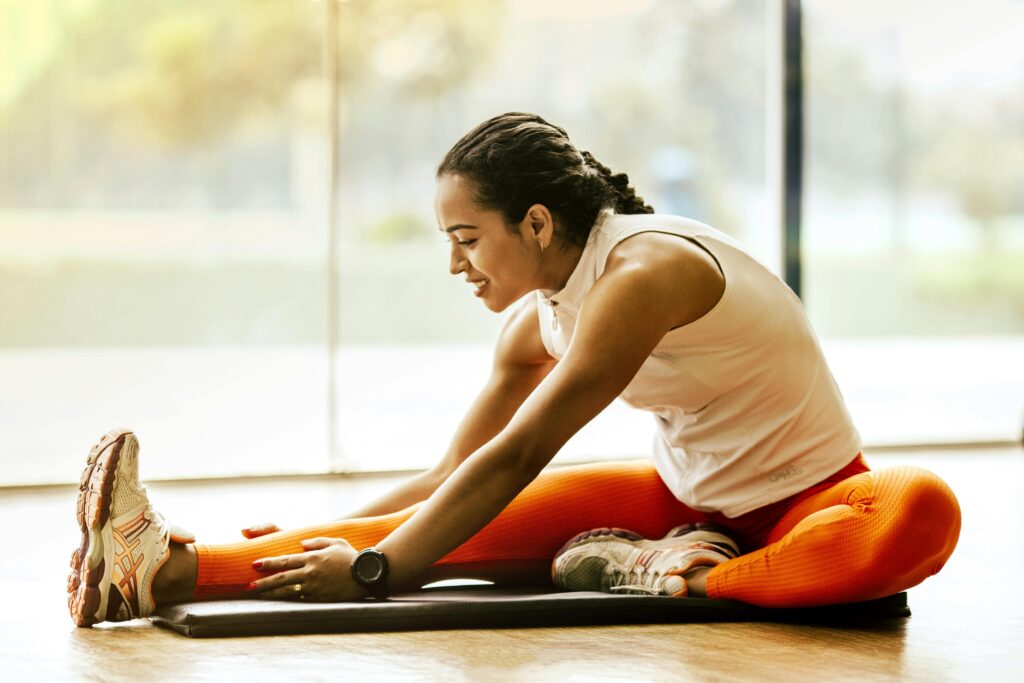
Breath-focused movement is exceptionally effective for anxiety and nervous system regulation. Postpartum yoga (specifically designed for postpartum bodies) combines gentle movement with breath awareness.
You can do this at home in short sessions (even 10 minutes helps). Focus on:
- Deep diaphragmatic breathing
- Gentle stretches that feel good
- Poses that release tension (child’s pose, gentle twists, hip openers)
- Connection with your body rather than achievement
Swimming or Water Movement
If you have access to a pool and have healed enough (typically 6+ weeks, no active bleeding), water movement is magical for postpartum bodies. The water supports your joints, makes movement easier, and provides a unique sensory experience that many people find calming.
Dance
Moving to music you love, in your living room, with no one watching, is profoundly therapeutic. Dancing:
- Releases stuck emotions
- Provides a sense of freedom and joy
- Requires no equipment or planning
- Can be done in short bursts
- Reconnects you with pleasure and spontaneity
Put on a song and move however feels good. This isn’t about looking good—it’s about feeling alive in your body again.
Strength Training (Eventually)
Once you’re several months postpartum and have rebuilt your foundation (pelvic floor, core stability, basic movement patterns), appropriate strength training can be incredibly empowering. Working with a postpartum fitness specialist ensures you’re building strength safely.
Strength training supports mental health by:
- Building confidence and sense of capability
- Providing clear, achievable progress markers
- Releasing tension and stress
- Creating functional strength for the physical demands of parenting
The key is “eventually” and “appropriate.” This isn’t about rushing back to your pre-pregnancy routine.
Mindful Movement Practices
Practices like tai chi, qigong, or somatic movement focus on internal awareness, slow deliberate movement, and integration. These can be particularly healing for postpartum bodies and nervous systems.
Creating a Sustainable Movement Practice
Start Ridiculously Small
If the idea of “exercising” feels overwhelming, start with one minute. Literally. Stand up, stretch your arms overhead, take three deep breaths. That counts.
Small, consistent practices build sustainable habits. One minute every day will serve you better than an hour once a week (that you dread and eventually abandon).
Focus on How You Feel
Before, during, and after movement, check in with yourself:
- How does my body feel?
- What’s my energy level?
- What’s my emotional state?
Use this information to guide what you do. If you feel depleted afterward, the movement was too much or too intense. If you feel energized and more grounded, you’ve found the right level.
Release Timeline Pressure
You don’t need to “get back in shape” by any particular deadline. You don’t need to run a 5K by six months postpartum or fit into pre-pregnancy clothes by your baby’s first birthday.
Your body’s timeline is the only one that matters. Some bodies need six months to feel ready for more intense movement. Some need two years. Both are completely normal.
Make It Actually Accessible
The biggest barrier to movement isn’t motivation—it’s logistics. Make it as easy as possible:
- Keep walking shoes by the door
- Have a yoga mat permanently rolled out
- Download a 10-minute movement app
- Set up childcare swaps with another parent for movement time
- Lower your standards for what “counts” (playing with your toddler counts, stretching while the baby naps counts)
If movement requires significant planning or overcoming obstacles, you won’t do it consistently when you’re exhausted.
Remove Measurement and Tracking
Step away from fitness trackers, scales, measurements, and “progress” photos if they trigger appearance anxiety or performance pressure. You’re not training for an outcome—you’re supporting your wellbeing.
The only metrics that matter: Do I feel better after moving? Am I enjoying this? Does this support my mental health?
When Movement Connects to Disordered Eating or Exercise
For some people, postpartum triggers or intensifies disordered relationships with food and exercise. If you notice:
- Obsessive thoughts about exercise or compensating for food intake
- Feeling guilty or anxious when you can’t exercise
- Exercising despite pain, exhaustion, or medical advice to rest
- Using exercise to punish yourself or “earn” food
- Feeling your worth is tied to your ability to exercise
These are signs to seek support from a therapist who specializes in eating disorders and body image. Movement should support your mental health, not create new sources of anxiety.
Addressing Body Image While Moving
It’s nearly impossible to completely separate postpartum movement from thoughts about your changing body. Here’s how to navigate this:
Notice the thoughts without attaching to them: “I’m noticing the thought that my stomach looks different.” You can observe the thought without believing it defines your worth.
Redirect to function over form: “My body carried and birthed my baby. It’s recovering. It deserves care, not criticism.”
Practice body neutrality: You don’t have to love your postpartum body. You can simply acknowledge it’s your body, it’s doing its best, and it deserves respect.
Curate your environment: Unfollow social media accounts that promote appearance-focused postpartum fitness. Follow accounts that celebrate diverse postpartum bodies and movement for wellbeing.
Challenge “should” thoughts: “I should look different by now” is internalized cultural pressure, not truth. Your body is exactly where it’s supposed to be in its journey.
If body image concerns are significantly impacting your wellbeing, consider working through them in journaling or with professional support.
Movement When You’re Dealing With Postpartum Mental Health Issues
If you’re experiencing postpartum depression, anxiety, or rage, movement can be part of your healing—but it’s not a cure-all.
Movement helps PPD/PPA when:
- Combined with other treatments (therapy, medication if needed, support)
- Kept gentle and sustainable
- Not adding to your stress or expectations
Movement doesn’t help when:
- You’re using it to avoid seeking professional help
- It’s creating additional pressure or guilt
- You’re forcing yourself despite exhaustion
If you’re struggling with postpartum rage, gentle movement can help discharge the physical buildup of anger. If you’re dealing with depression and need to reconnect with your partner, suggesting walks together might be a low-pressure way to spend time in each other’s company.
But movement is a tool, not a replacement for comprehensive mental health support.
Permission Slips
You have permission to:
- Move less than you did pre-pregnancy, maybe indefinitely
- Take months or years to rebuild capacity
- Choose movement that feels good over movement that’s “most effective”
- Skip days when you’re exhausted or touched out
- Prioritize sleep over exercise (sleep is more important for mental health)
- Never “get your body back” and still be worthy of respect and care
- Change what movement looks like as your needs and capacity change
When Movement Feels Impossible
Some days (or weeks or months), movement will feel completely inaccessible. You’re too tired, too overwhelmed, too touched out, too depressed. That’s okay.
In those times:
- Focus on basic care (feeding yourself, resting when possible)
- Remember that rest is productive
- Consider whether you need more support (with childcare, mental load, mental health treatment)
- Release guilt about not moving—guilt serves no purpose
- Trust that your capacity will return when conditions allow
You’re not failing. You’re surviving a profoundly demanding life stage.
The Real Goal
The goal of postpartum movement isn’t a certain body size, weight, or fitness level. The goal is:
- Feeling more grounded in your body
- Supporting your mental health through a challenging transition
- Rebuilding strength and capacity at your body’s pace
- Finding moments of pleasure and autonomy
- Honoring your body’s incredible work and ongoing recovery
These goals have nothing to do with how you look and everything to do with how you feel.
Your postpartum body isn’t a “before” photo waiting to become an “after.” It’s your body, right now, deserving of care, respect, and gentle movement that supports your wellbeing—not society’s expectations.
Ready to Support Your Mental Health Holistically?
If you’re navigating postpartum mental health challenges and need support developing sustainable self-care practices (including movement), I’m here to help. Together we can explore what actually supports your wellbeing rather than what you “should” be doing.
Book a session with me to create a personalized approach to postpartum wellness that honors your body, your mental health, and your unique journey.
Dealing with intense emotions that make self-care feel impossible? Read: Why You’re Always Angry Postpartum (And How to Manage Rage)
Looking for other ways to support your identity through this transition? Check out: Journaling for Matrescence: Prompts to Navigate Identity Loss and Change

